Point of Sale
The Cellular Connection (TCC) is the largest Verizon-authorized retailer in the U.S. In 2016, TCC began developing its first in-house digital product—a tablet-based point-of-sale system to replace fragmented legacy tools. I joined as the first UX/UI designer, leading the end-to-end design of the product from early concept through nationwide launch in a startup-like environment.
*Confidential information has been omitted or redacted. The designs shown do not represent the final production product.
Context & Problem
TCC stores relied on two disconnected POS systems—one for Verizon services (devices and plans) and another for TCC-operated accessories and third-party products. This fragmentation created significant operational and business challenges:
-

Slow checkout
Sales Consultants manually transferred information between systems, increasing transaction time.
-

Scattered customer data
No unified view of customers, limiting cross-sell and upsell opportunities.
-

Limited functionality
Consultants relied on personal tools or workarounds to complete tasks.
-

Lack of mobility
Desktop-only systems restricted in-store interactions and flexibility.
Learn Users & Sales
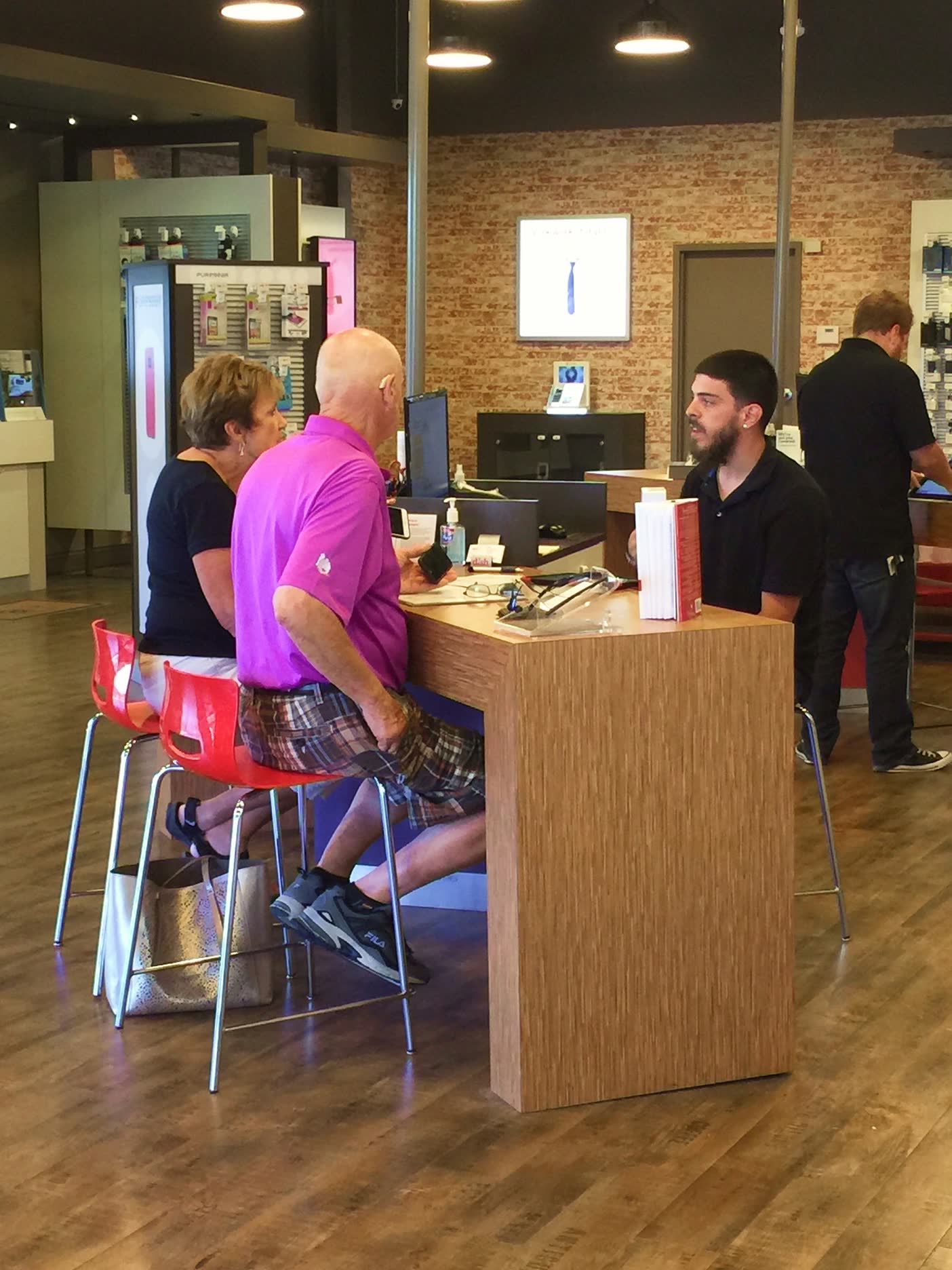
I conducted in-store observations at 8+ locations, interviewed 20+ Sales Consultants, 10 Store Managers, and 3 Regional Directors, and participated in sales training to understand workflows and challenges. The primary users were 2,000+ Sales Consultants, with managers and regional directors as secondary users.
Key Insights
Sales Consultants frequently used personal phones for calculators, research, and messaging.
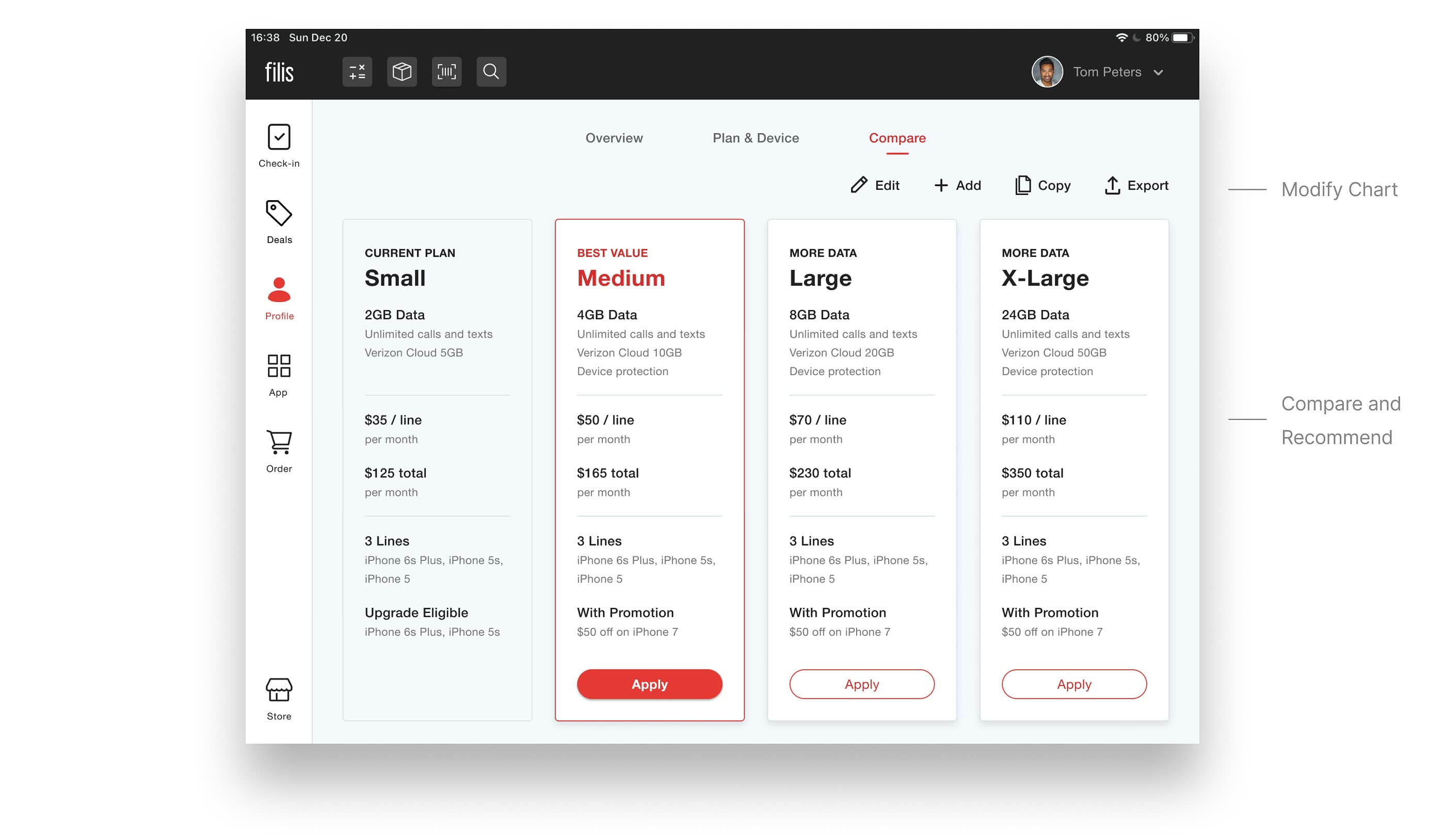
Consultants relied on workarounds (e.g., self-made Excel sheets) to compare plans.
Over 60% of customers were middle-aged or seniors, requiring clear guidance.
Top-performing consultants prioritized conversation flow over system navigation.
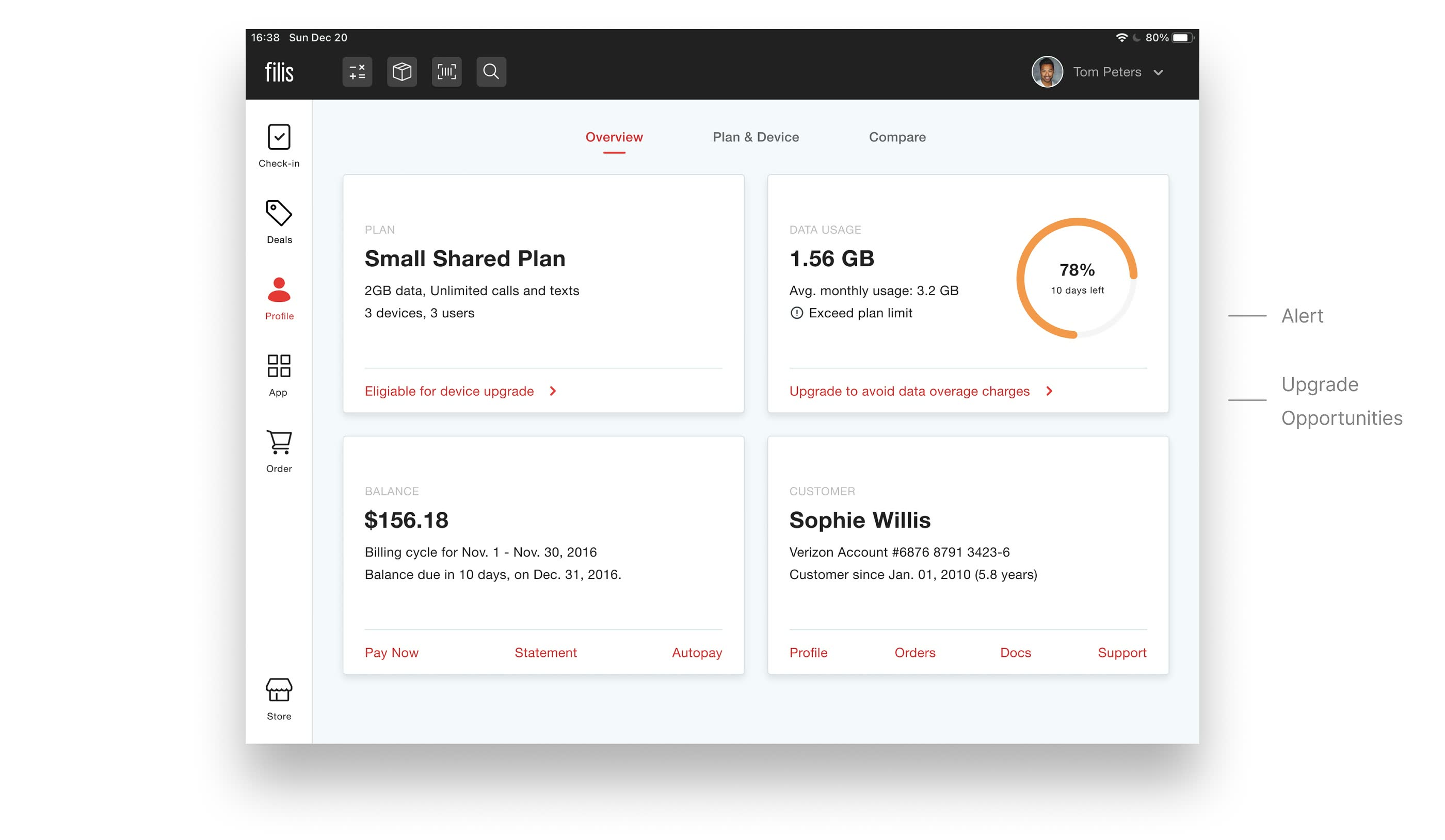
High-performing consultants consistently delivered exceptional customer service and identify new sales opportunities.
Challenge & Solution
The key challenge was how to support a wide range of sales and operational tasks while keeping the experience fast, intuitive, and scalable.
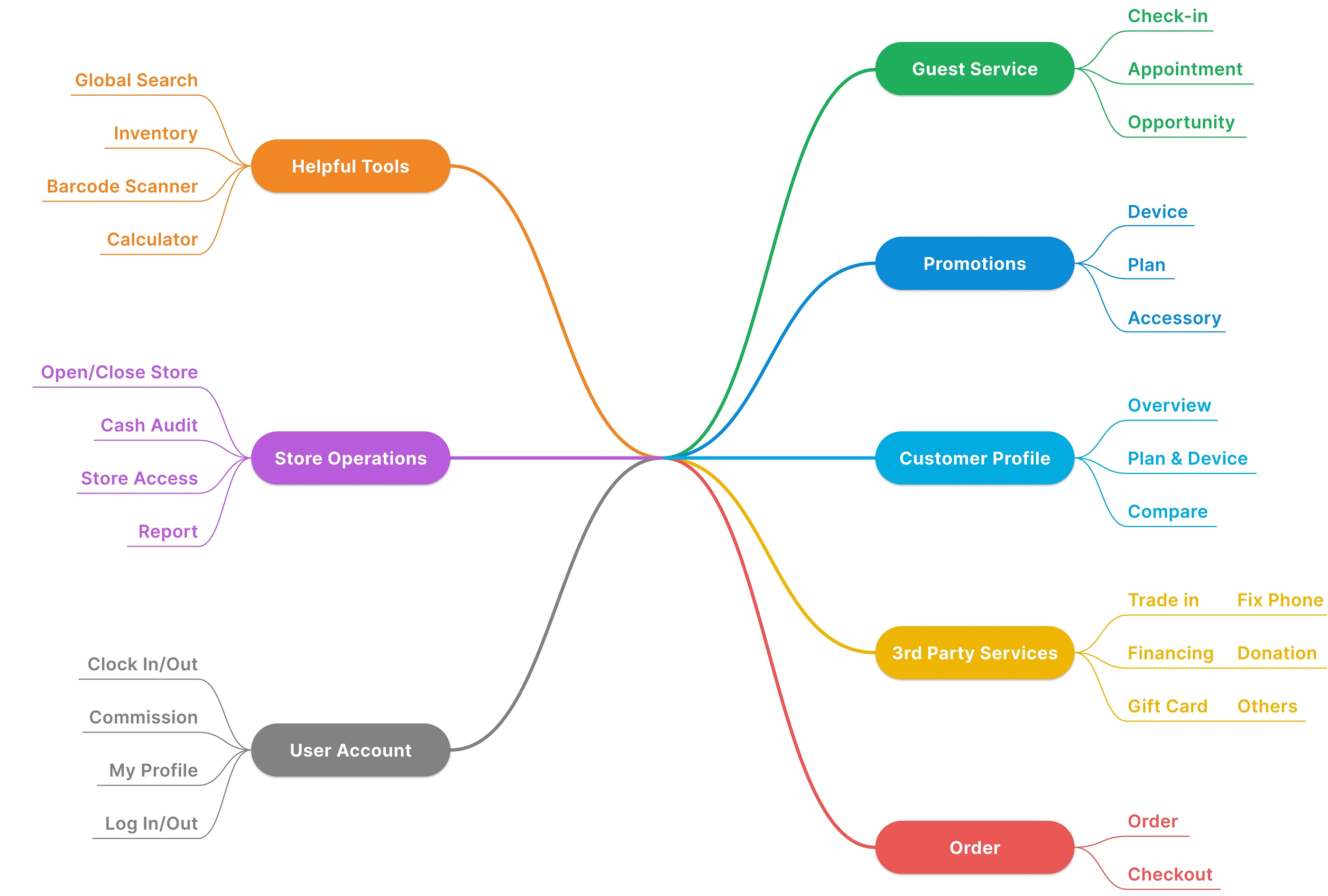
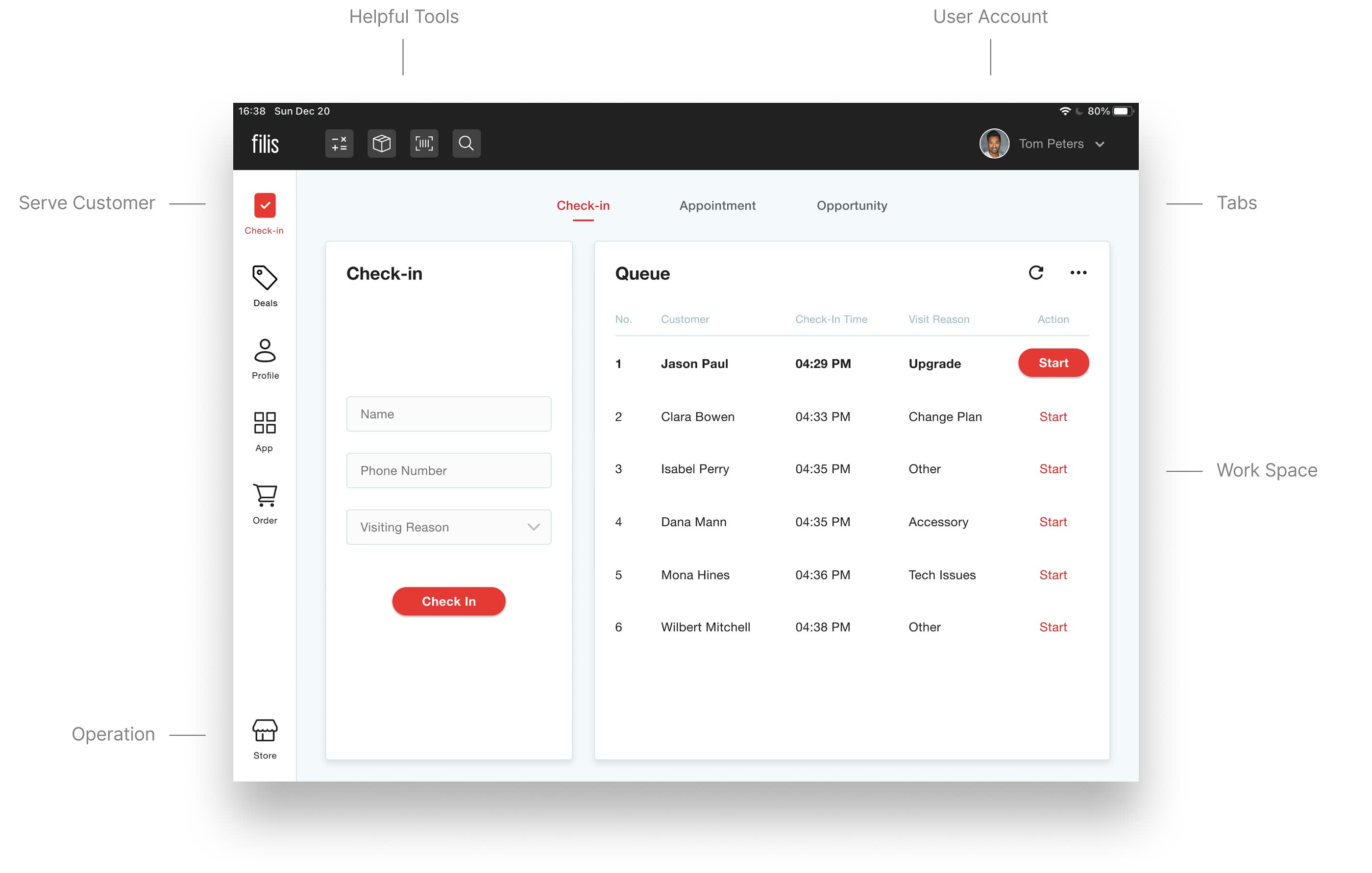
I drew inspiration from TCC’s “5 Steps to Serve a Customer” sales flow. The POS was designed to support this flow, with frequently used tools accessible at every step. Operational and administrative tasks were organized separately to keep the experience fast and intuitive.
Information Architecture
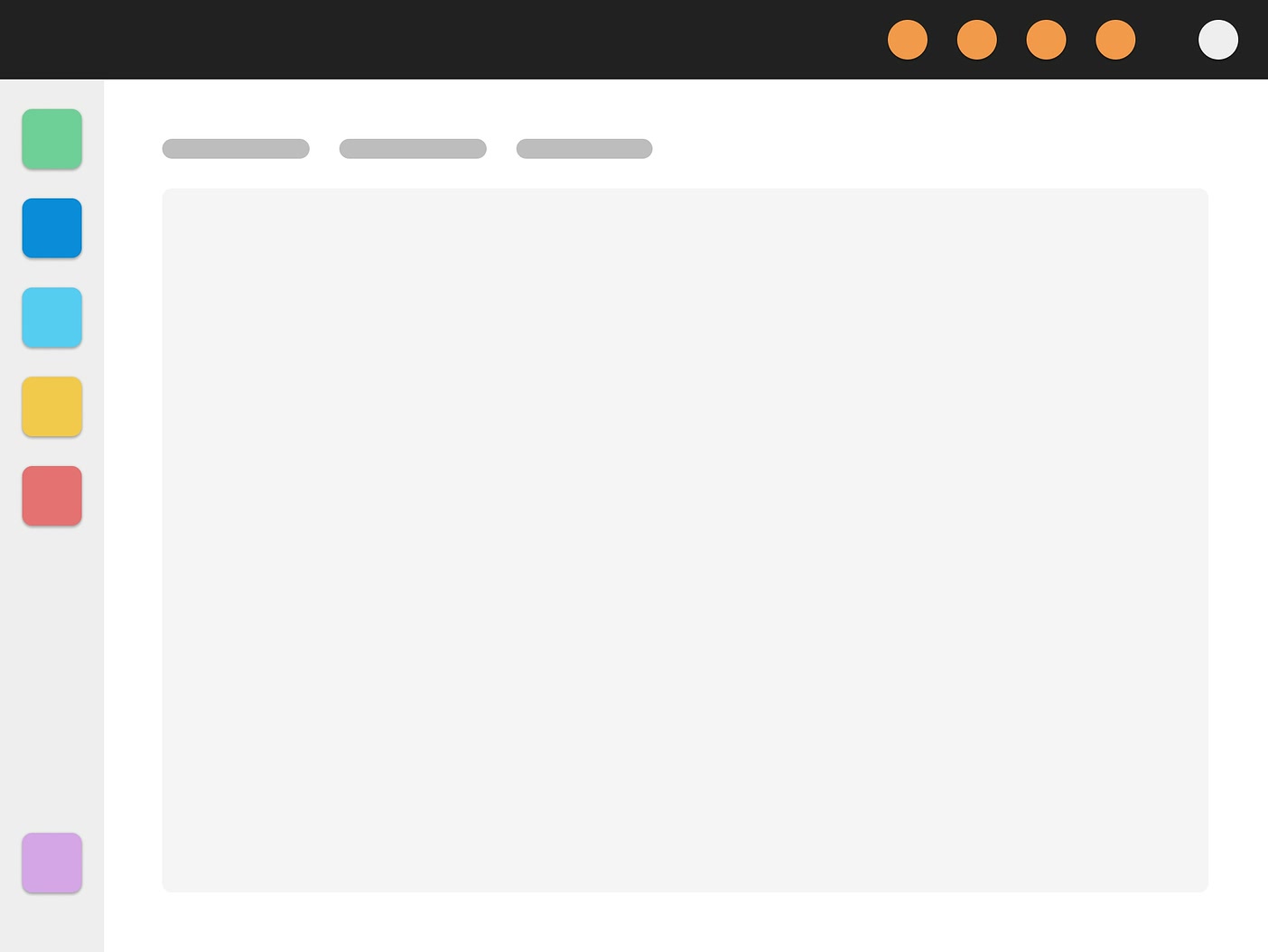
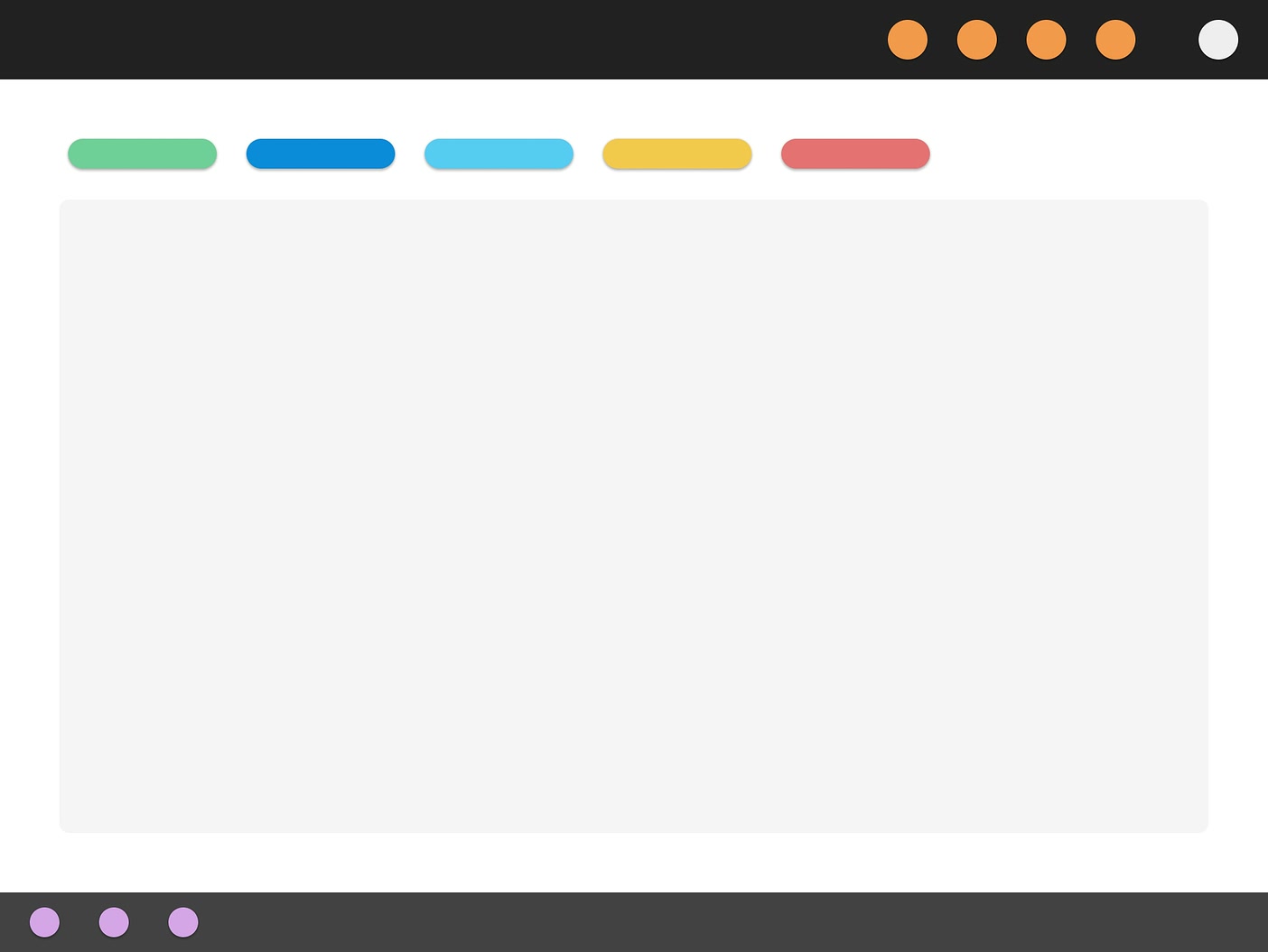
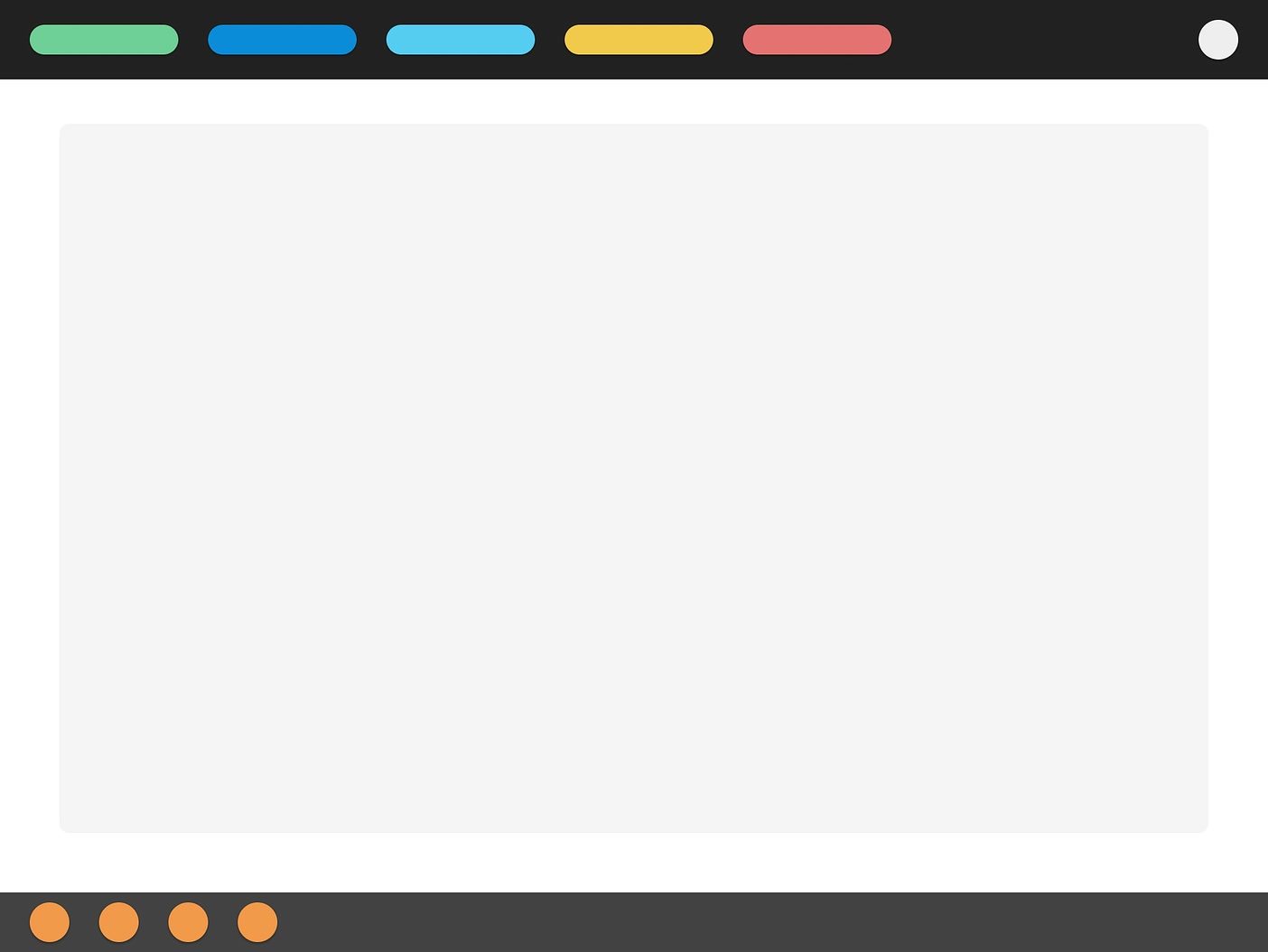
Ideas for Layout

Design Results
Test & Verify
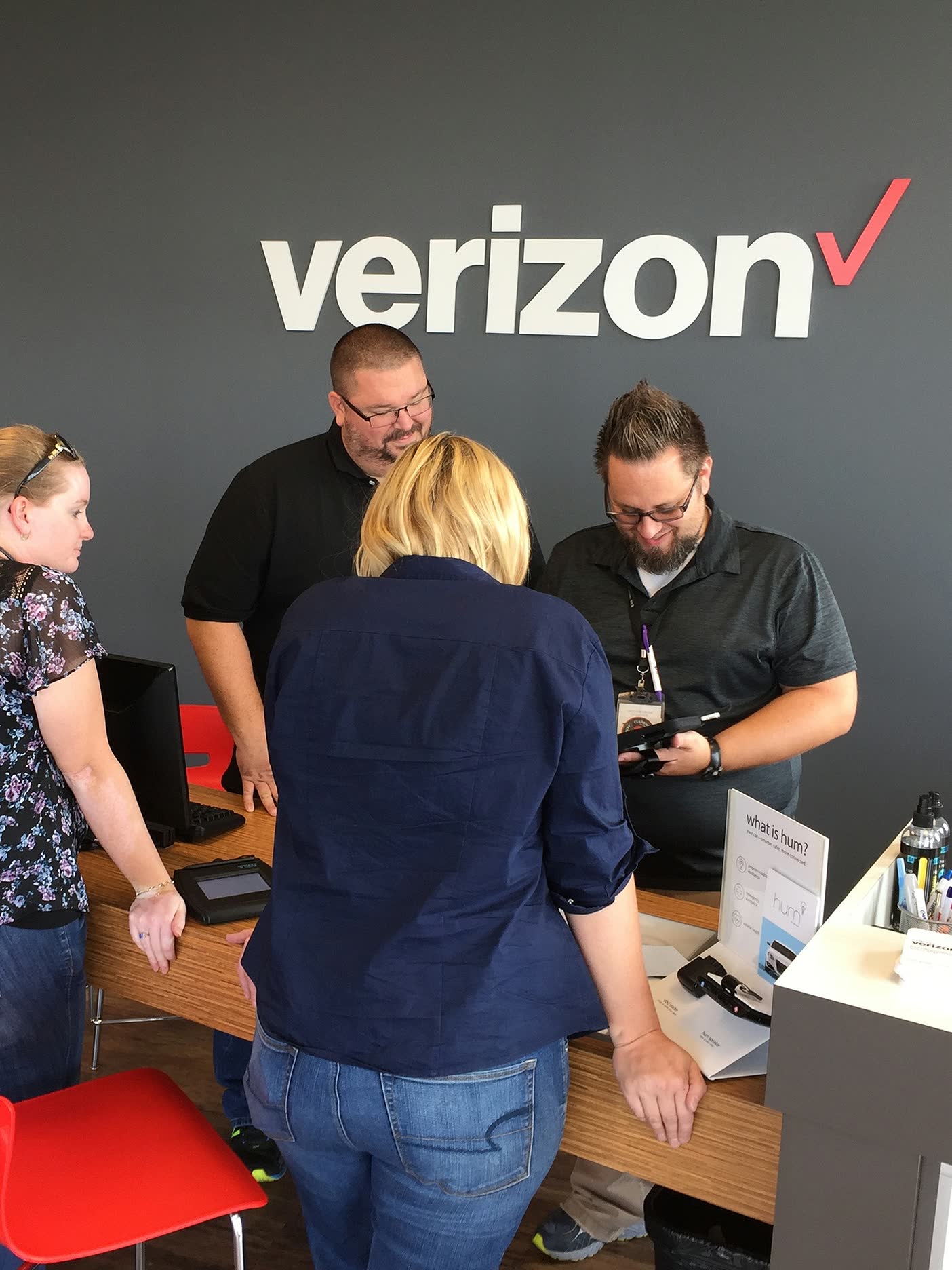
I created clickable prototypes to test different design concepts and gathered direct feedback from Sales Consultants in stores. Before launch, we conducted usability tests using real wireless activations and transactions, confirming that the system was intuitive, efficient, and ready for nationwide deployment.
Outcomes
In 2018, the POS app was successfully launched across 850+ Verizon TCC stores, serving 2,000+ Sales Consultants and receiving strong positive feedback from store teams and leadership. Key achievements include:
-

Fast checkout
Order creation and checkout time reduced by 80%.
-

Efficient service
Customer service time reduced by 40%.
-

Increased sales
Unified workflows and integrated data generated more high-quality opportunities, driving sales growth.